Big thanks to all who reviewed the DigitalArc Toolkit; your feedback was super helpful!
During the Spring of 2026, the DigitalArc Team issued an open peer review call of the DigitalArc Toolkit. We received valuable feedback from many of you!
The DigitalArc Team reviewed all comments in the Google Doc and in the Google Form. We categorized the comments to help us organize the feedback. The comments largely fell into the following categories:
We have begun incorporating some of the feedback into the toolkit, starting with the smaller changes. Comments that address fundamental changes to organizational structure are currently under discussion. Reviewers all acknowledged that the toolkit contains rich documentation, but we need to rethink framing for certain sections and a more approachable structure for interacting with the toolkit. We are tracking all feedback in our GitHub repository, GitHub issues, so that we all can collectively track progress on changes!
Community partners and grant team share what’s working and what’s not while having fun together!
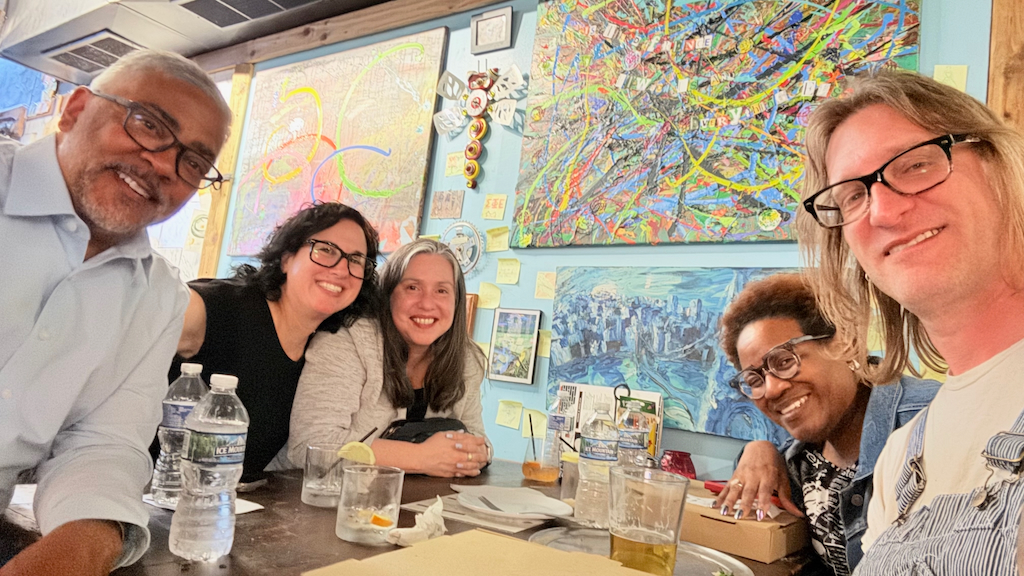
Community partners, Jacqueline Johnson, Bryan Glover, Samuel Love and Jaslyn Kelly, participated in a panel presentation with the DigitalArc grant team, Dr. Jazma Sutton, Dr. Kalani Craig and Michelle Dalmau as part of the annual Midwestern History Conference held at Miami University, Oxford, Ohio (which is also the home of community partners, Bethel A.M.E. Church): “Becoming a Community through the Creation of Community Archives: Challenges & Opportunities of Grant Funding the Preservation of Black Midwestern History.” See the presentation slides for more information.
P.S. We learned a lot and had a great time together!
Photographs, transcripts, and audio finally populate the partners’ “collections” tabs after this third workshop
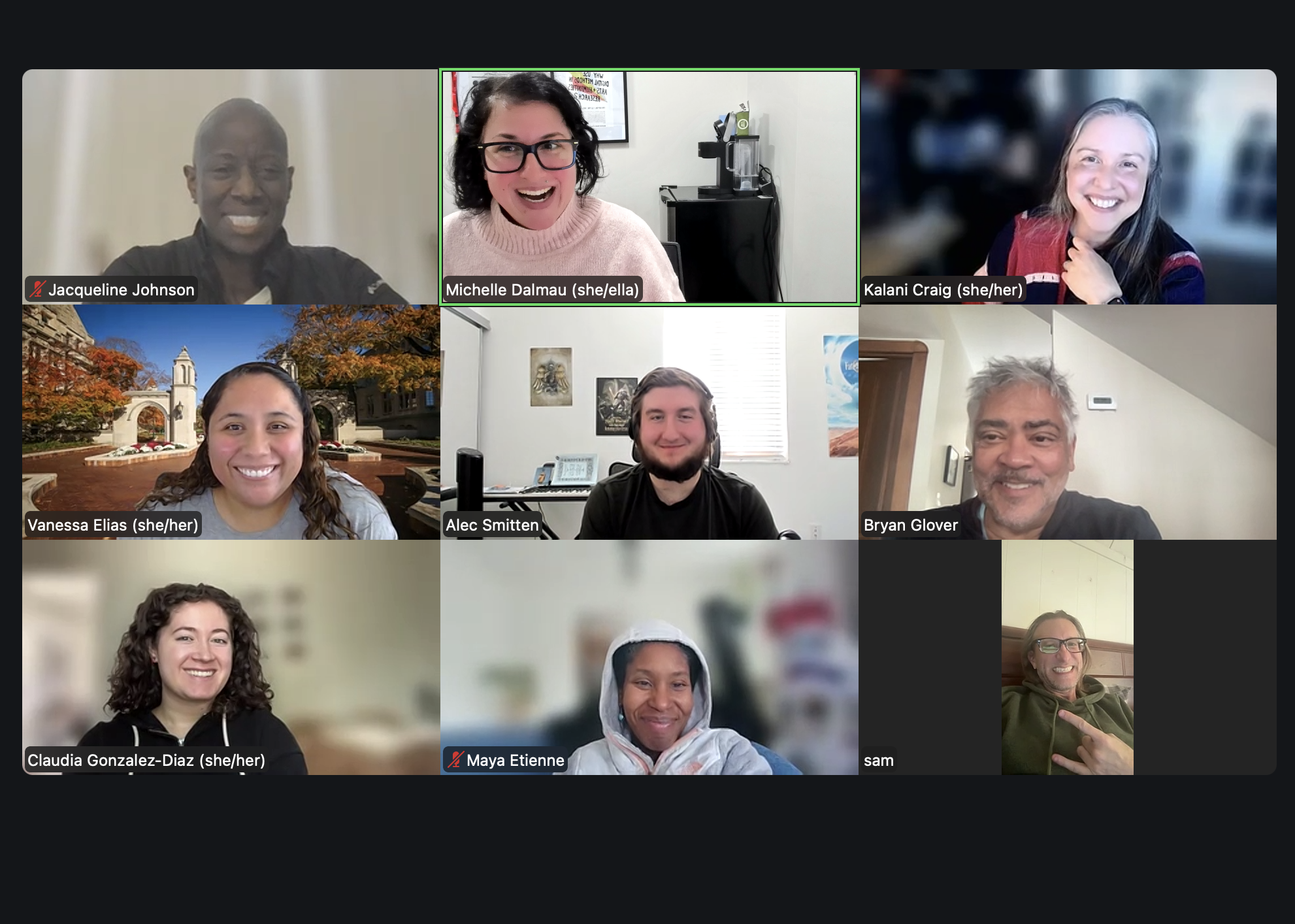
DigitalArc partners uploaded their first items to the “collections” tab, a step that relies on the behind-the-scenes labor of metadata collection and file naming learned at previous workshops. This skill makes the community archive organized and accessible to members and the public. The DigitalArc team used the metaphor of learning to drive to explain a file upload: to turn the ignition and park, the first and last steps in driving a car, a new driver needs coaching to know what to do. Meanwhile, pressing the gas pedal feels more intuitive. Similarly, opening GitHub and addressing errors will likely require assistance the first few times, but uploading items eventually becomes like muscle memory.
For this workshop, participants followed our DigitalArc documentation available here.
A prime example of how DigitalArc can be used to create different digital archives
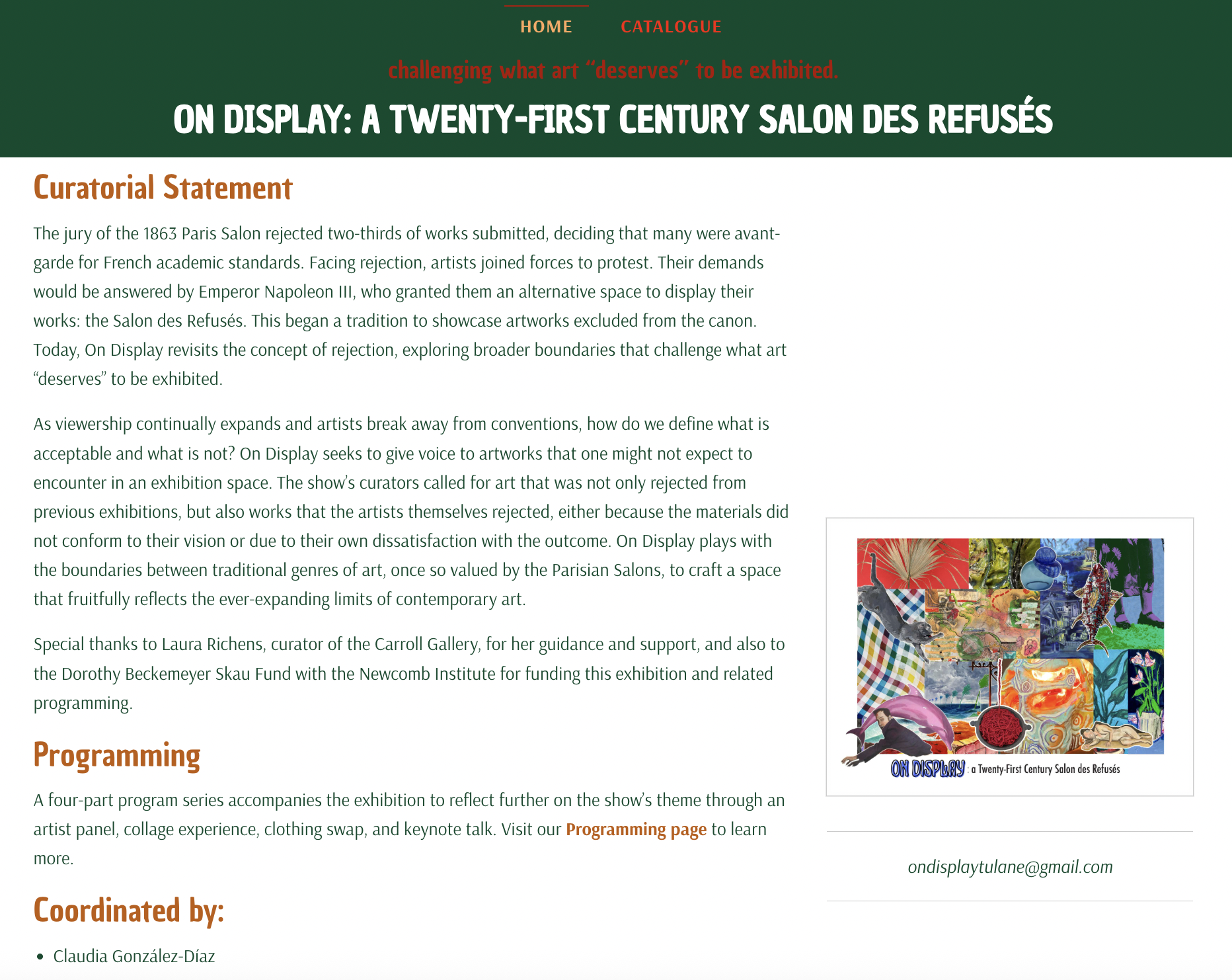
Suitable for many forms of archiving, the Jekyll template can also catalogue art exhibitions, such as On Display: A 21st-Century Salon des Refusés on view from August 18 to September 19, 2025, in the Carroll Gallery at Tulane University. Connecting the sculture, painting, and photography of about 30 artists, the curatorial team eschewed selective curatorial practices to explore rejection as a lens for interpretation and evaluation. The online platform allowed curators, participating artists, host institutions, and grant donors to revisit the exhibition after its closing.
Click here to view the exhibition.
Learn how the DigitalArc Toolkit has evolved
Vanessa Elias and Michelle Dalmau presented, “La Casa at Indiana University Bloomington: Creating a Community-Driven Digital Archive in an Institutional Context,,” which explored the balance of a community-led digital archiving approach within an institutional context. The La Casa/Latino Cultural Center at Indiana University digital archive is one of the foundational projects that led to the most recent version of the DigitalArc Toolkit. See the presentation slides for more information.
DigitalArc team and partners discuss metadata creation and backend organizational details for posting items

In this workshop, the focus was on methodologies for community leaders to work with community members in the collection & creation of metadata. From here, the workshop transitioned to more technical discussions of file organization systems, with an emphasis on flexibility and accessibility, initial steps for preparing transcriptions of oral histories, and the “do’s and don’t’s” of editing photographs.
For our guide to the collection of metadata, be sure to check out the DigitalArc documentation.
See also our informational slides
DigitalArc project team and partners walk through the process of setting up their own personal websites using the template

As a followup to the previous in-person workshop, the DigitalArc team supported community members in the process of setting up their own GitHub accounts with the DigitalArc template. Over the course of the workshop, communtiy members were introduced to the basics of working in the GitHub web environment and the principles of customizing their own digital archive. By the end of the workshop, every participant had successfully created and accessed a sample website for themselves, with the itention of using this website as a testing ground for their larger community archives.
See also our informational slides that detail the process of copying and configuring the DigitalArc template and our YouTube playlist that features the recordings from the workshop.
This is Gary along with core community collaborators kick-off the Voices of Gary, a community-led digital archive and storytelling initiative
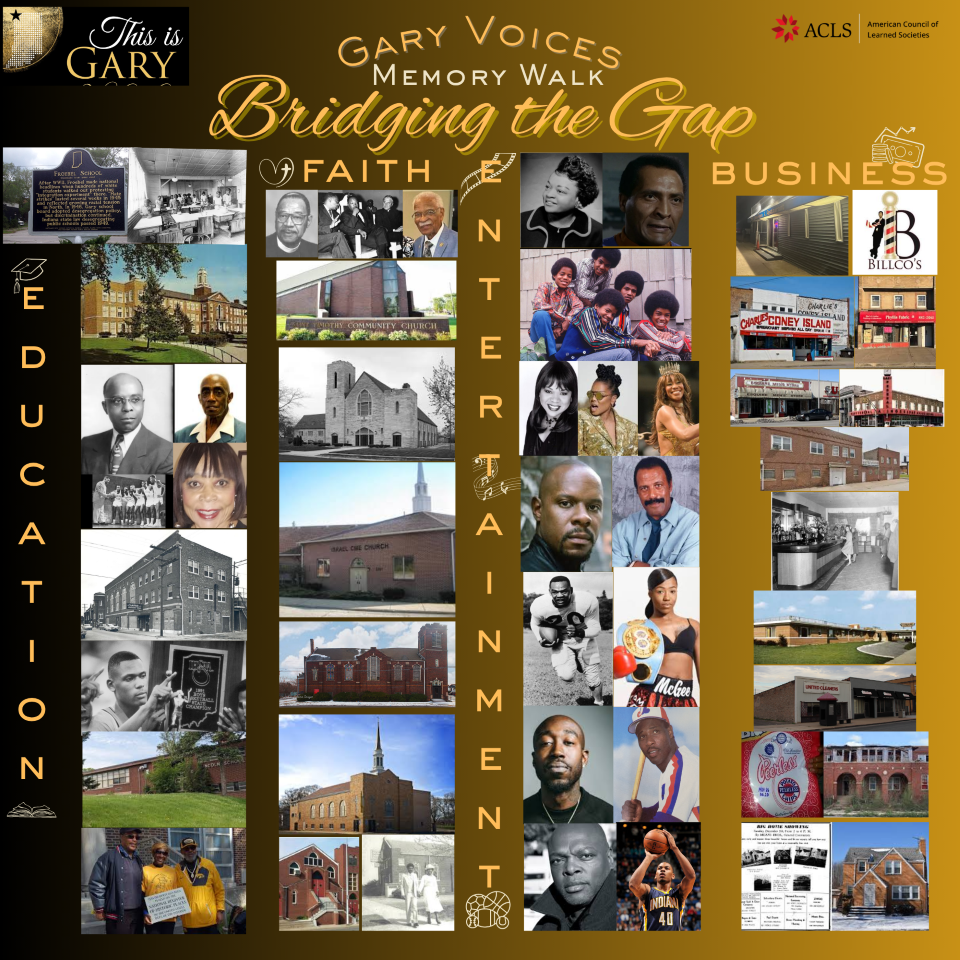
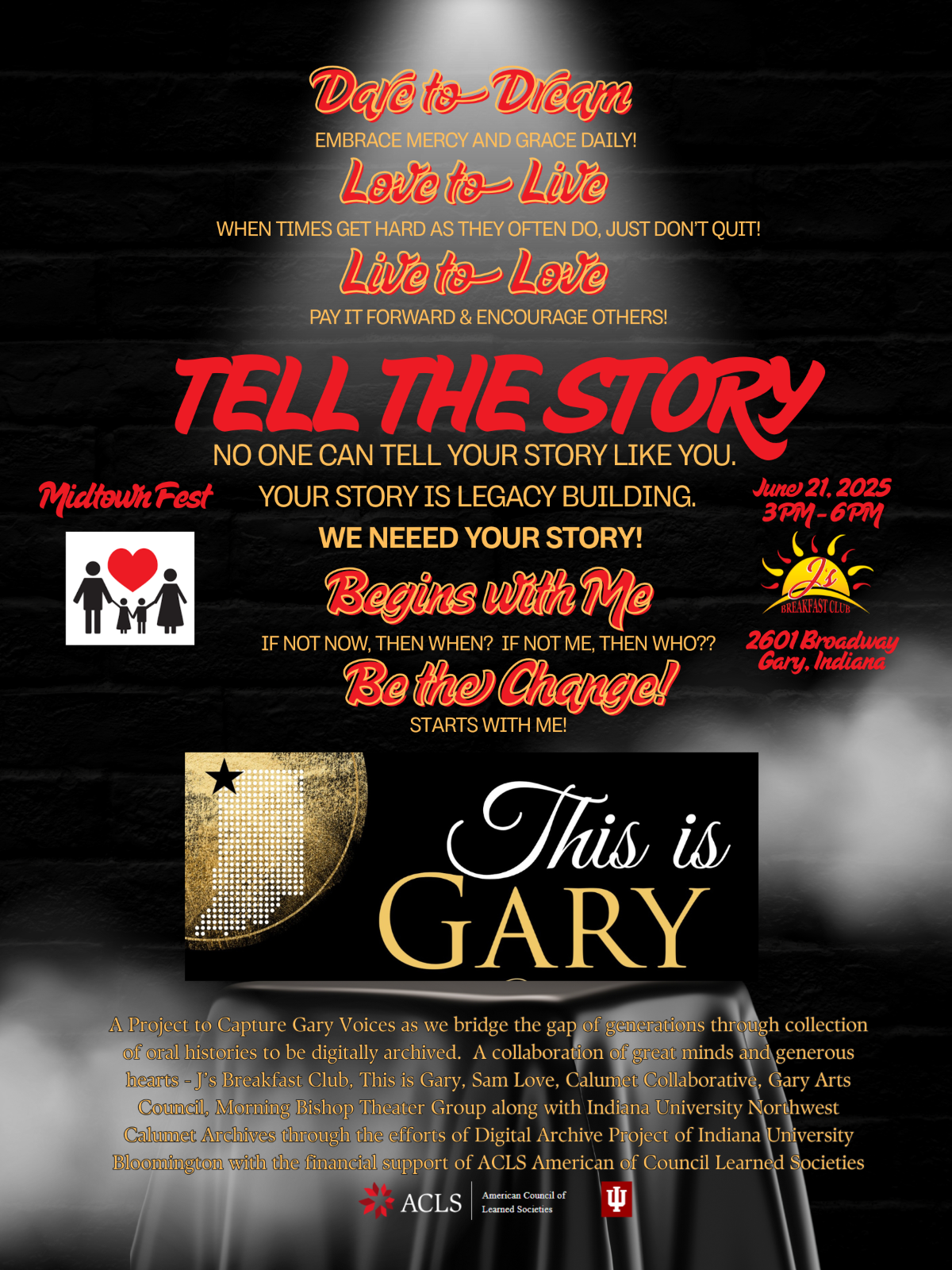
As part of Gary Indiana’s Midtown Fest, which celebrates Gary’s culture and communities, This is Gary! / Voices of Gary participated in this three-day celebration by hosting a Memory Walk showcasing landmarks, people, and events that makeup this town’s glorious past and present. The Memory Walk was developed as a way to engage community members in the telling of a particular story that centers a pivotal aspect of Gary – what they may recall, what they know, and how they may have particpated. It also allowed community partners to promote an upcoming community story-sharing event in August 2025 in which community members can archive their stories as part of the Voices of Gary digital community archive.
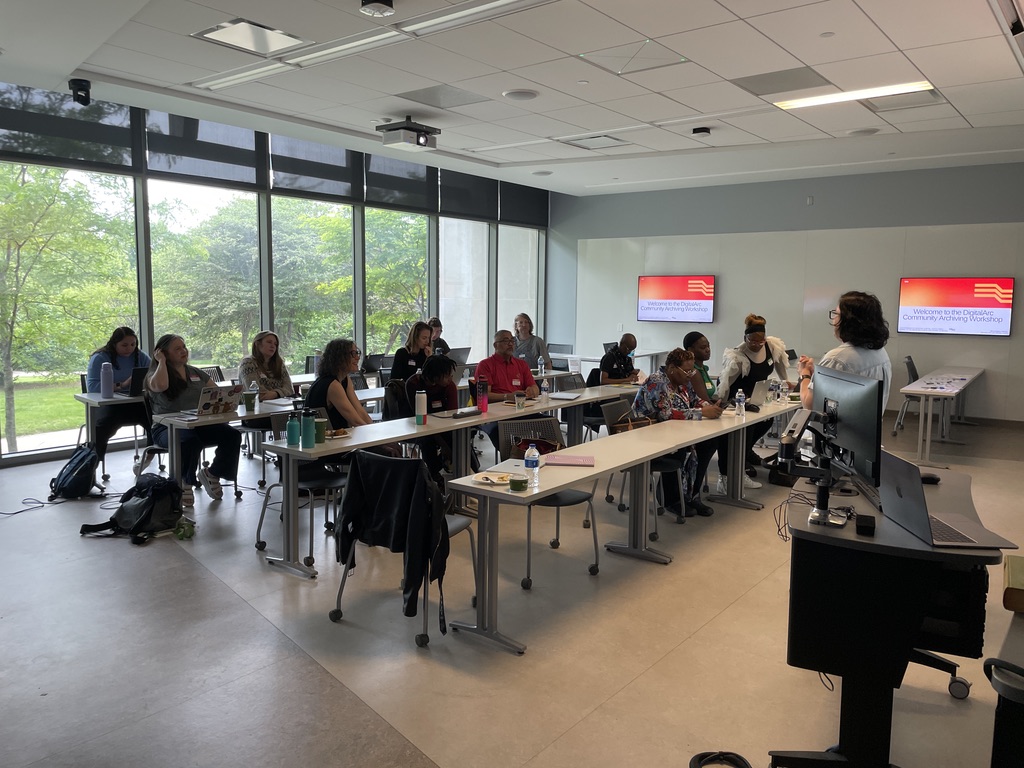
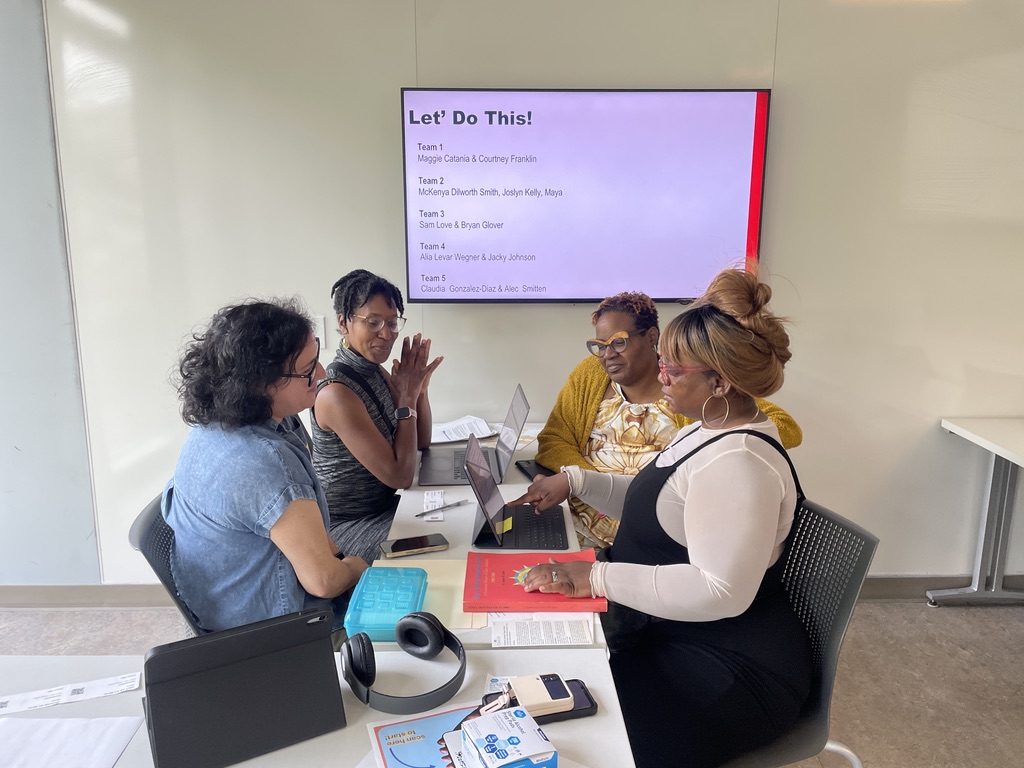
DigitalArc project team and partners walkthrough a “history harvest” during summer in-person workshop
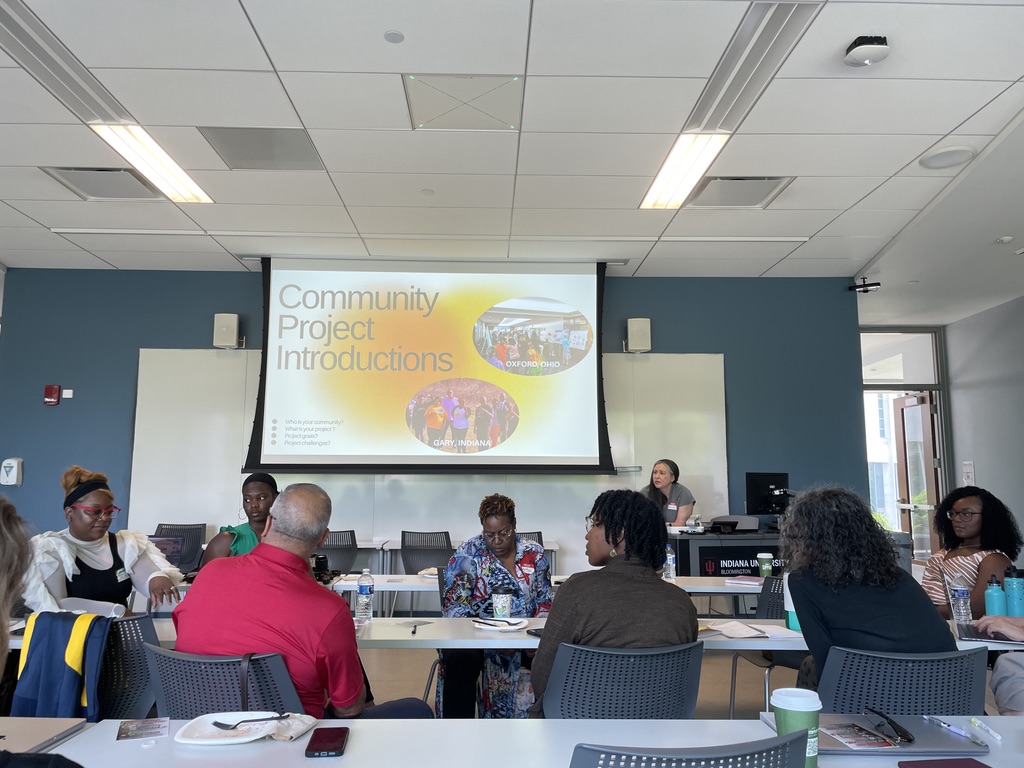
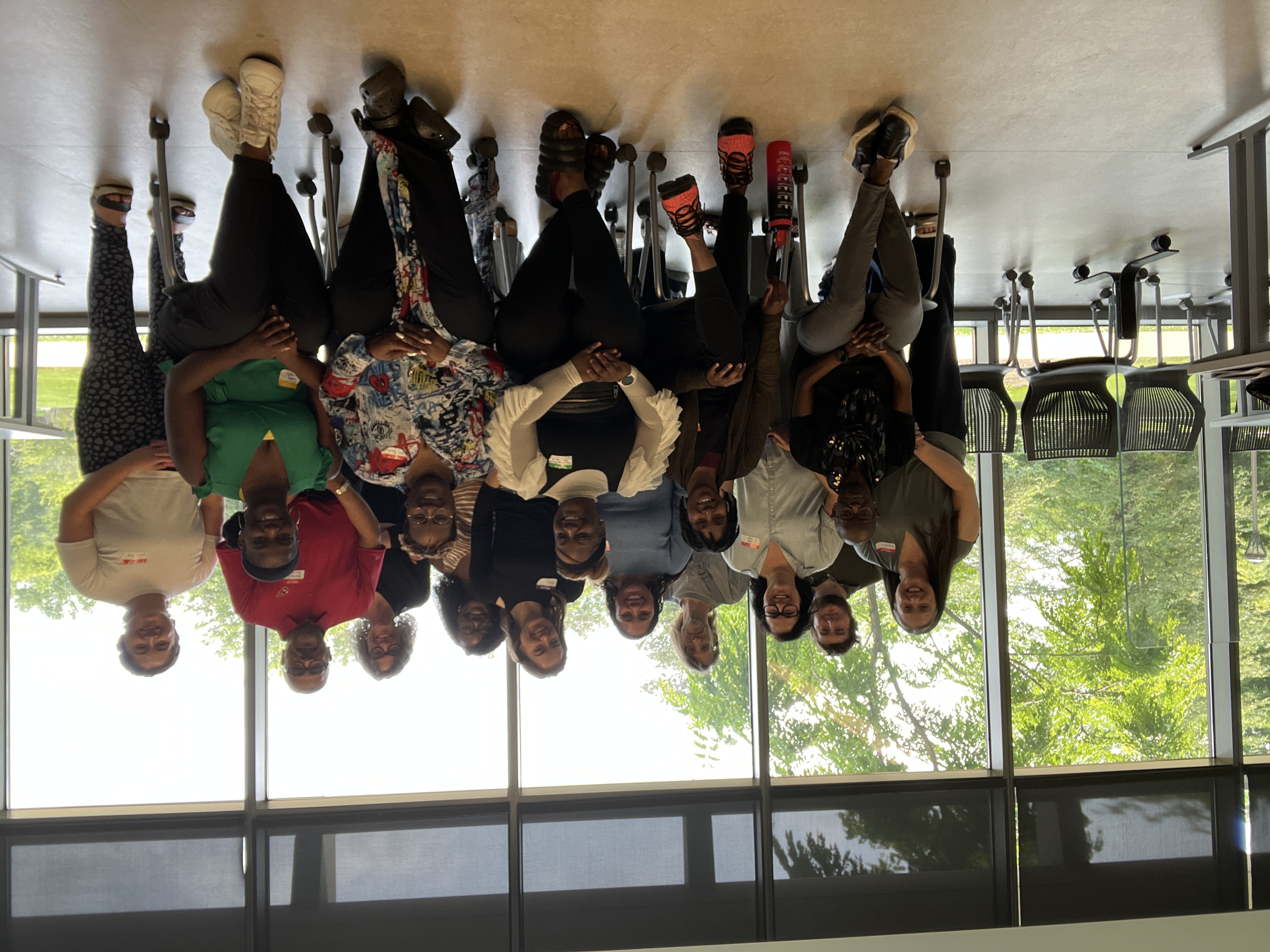
Midwest community leaders worked toward their digital archiving goals at the DigitalArc In-Person Workshop from May 31-June 1, 2025, in Bloomington, Indiana. The focus on this worksop was community and collections with the following learning objectives:
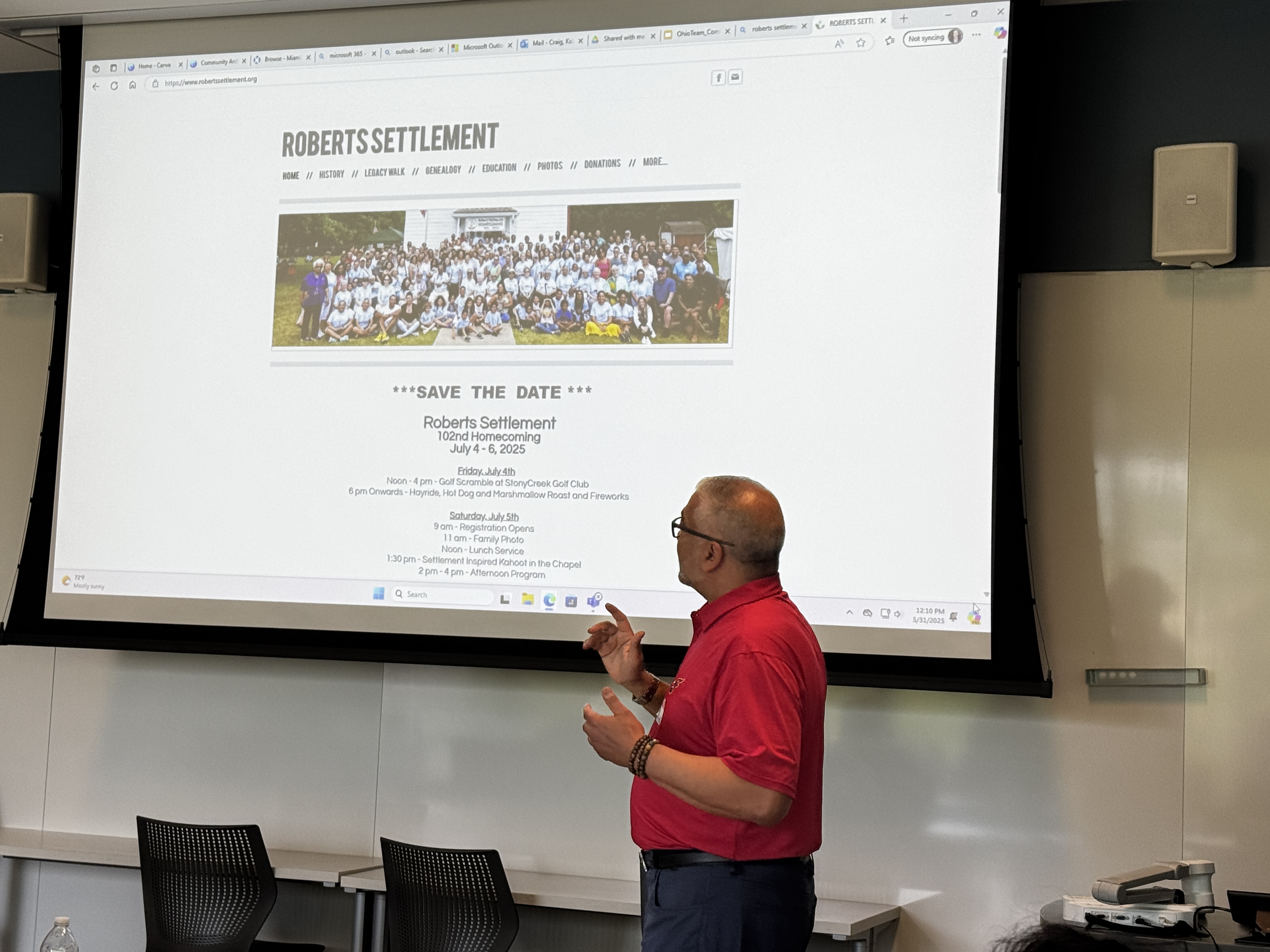
Representing Gary, Indiana Roberts Settlement in Indiana, and Oxford, Ohio, the nine attendees shared approaches to community archiving and learned about the DigitalArc Community Archiving Playbook to weigh which parts of this adapted history harvest format best fit community interests. For the first time, the DigitalArc project team and the project partners met one another in-person during this event!
We set forth a reading list to guide our conversations for the day:
See also the introductory slides for the workshop.
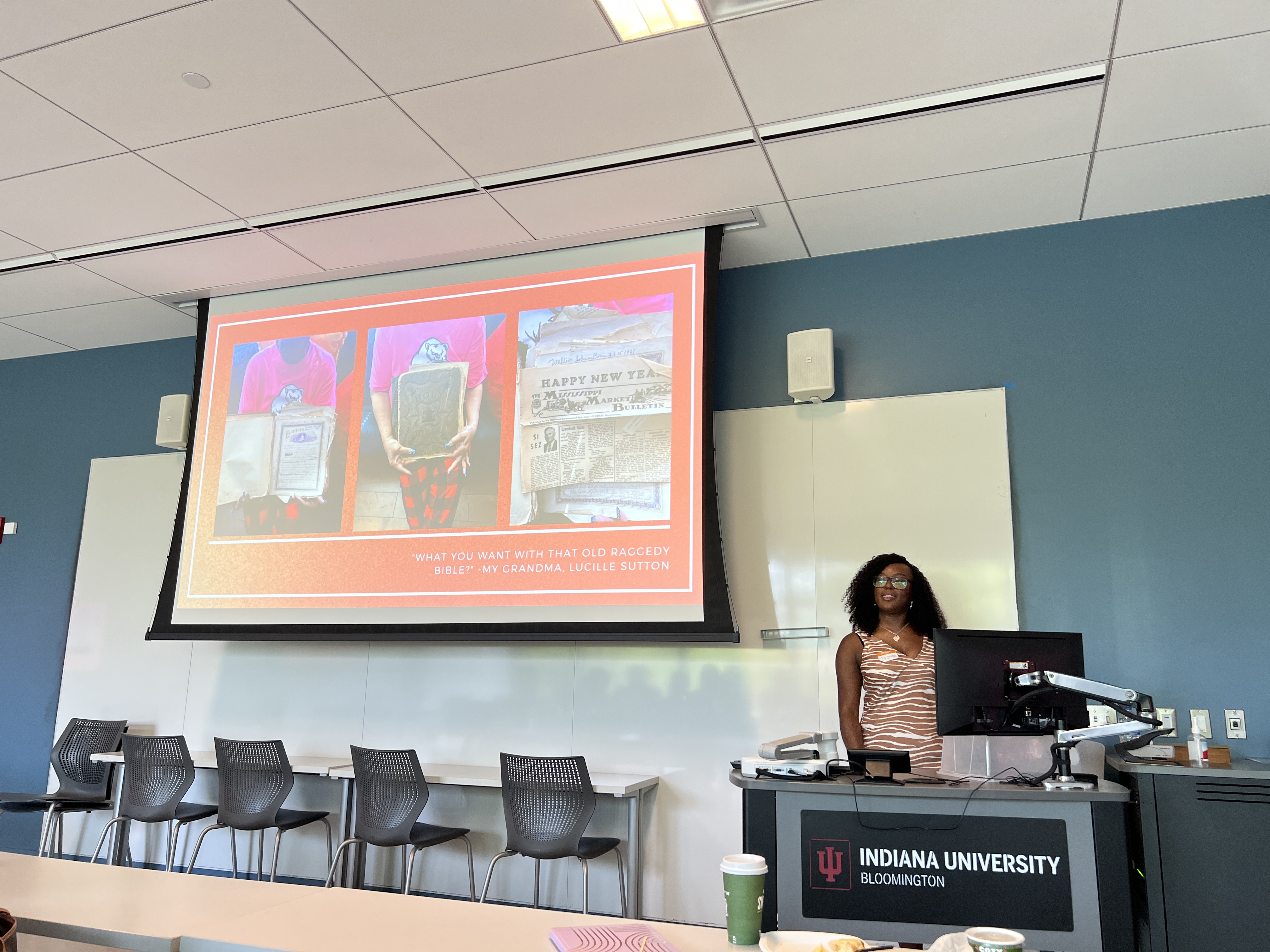
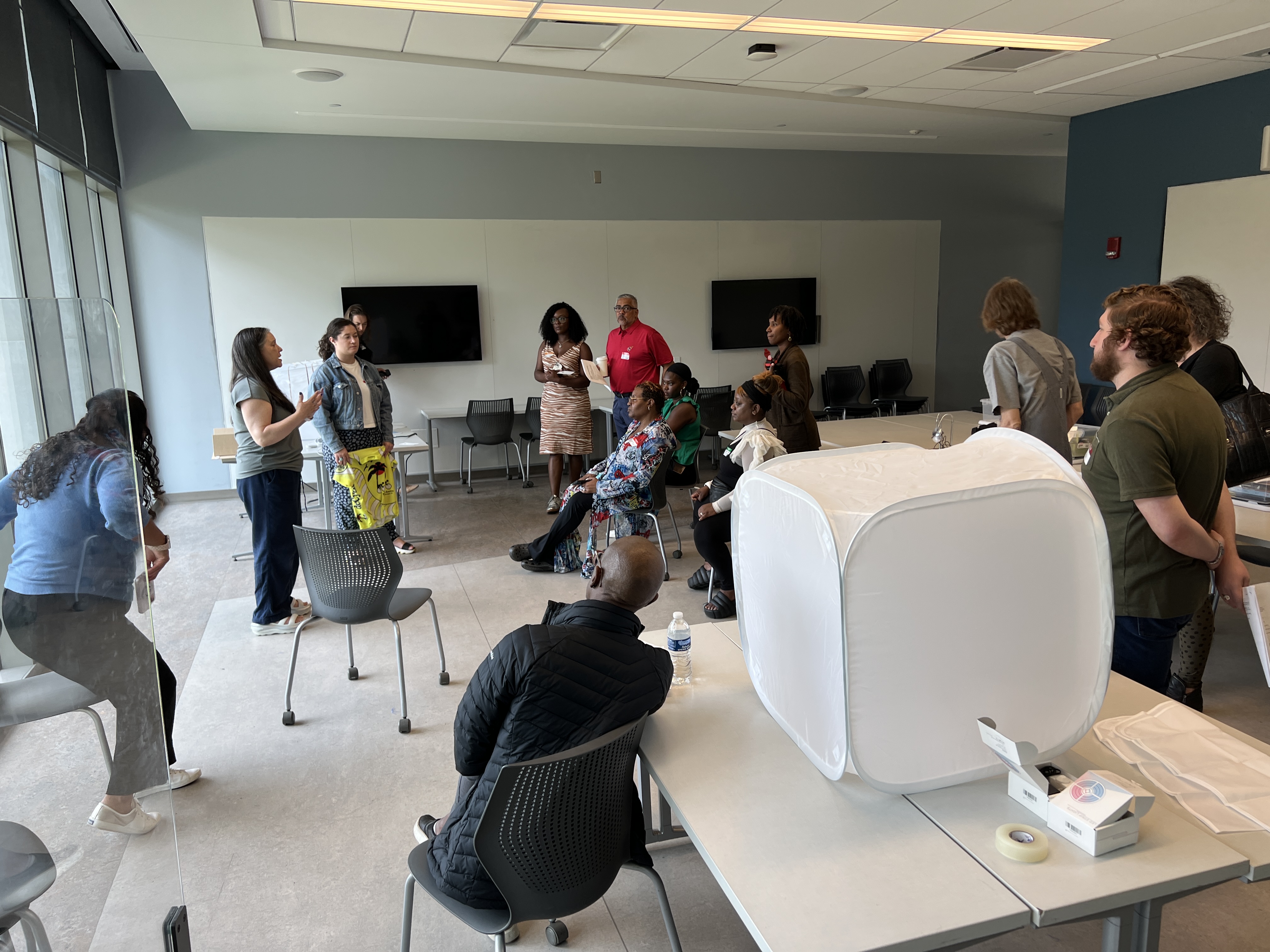
On Day 1, partners introduced themselves, the community they represented, their community archiving project, and related goals and projected challenges. DigitalArc members spoke about the historical, social justice-driven, and logistical rationale behind DigitalArc philosophy, platform and toolkit. The next day, partners and team members put the Playbook into practice by walking through each station of a hypothetical history harvest event–they checked in “contributors,” tagged objects, collected metadata, and tried out smartphone photography using affordable light boxes.
Learn more about the playbook and the process by visiting the DigitalArc Toolkit documentation, which is a work-in-progress.